
Saliva, Gum Disease, and the Future of Precision Dentistry
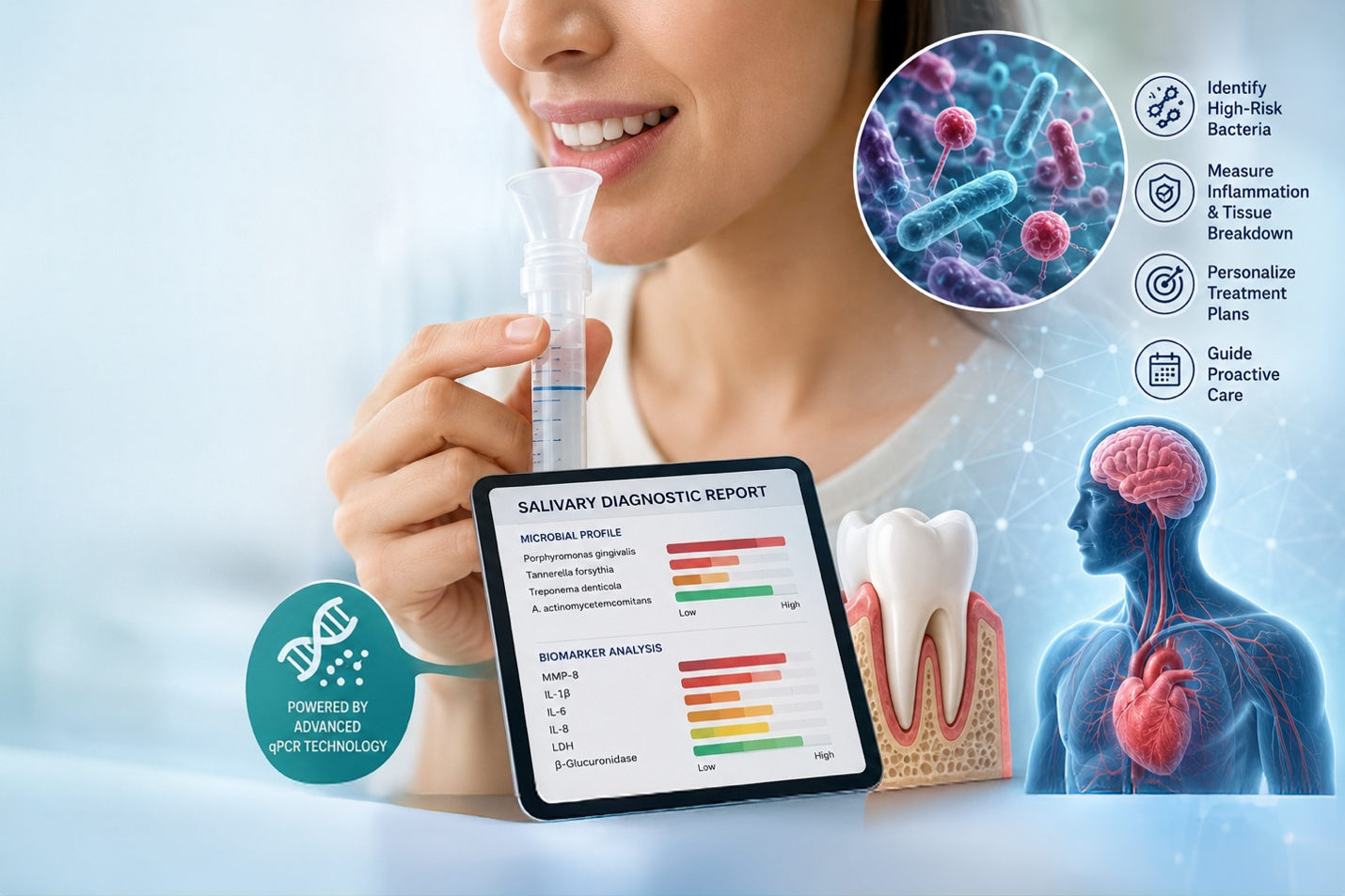
For most people, saliva is something they rarely think about unless their mouth feels dry, they are thirsty, or they are sitting in a dental chair. Yet saliva is one of the most important diagnostic fluids in the human body. It carries bacteria, enzymes, inflammatory signals, genetic material, and clues about what is happening in the mouth and, in some cases, the rest of the body.
For decades, dentists have diagnosed gum disease mainly through what we can see and measure clinically: bleeding gums, pocket depths around the teeth, bone loss on X-rays, loose teeth, gum recession, plaque, calculus, and the patient’s medical history. These tools remain essential. A periodontal probe, a careful examination, and good radiographs are still the foundation of periodontal diagnosis.
But modern dentistry is moving into a new era. Salivary diagnostic testing allows dentists to look beneath the surface. Instead of only asking, “How deep are the pockets?” or “Do the gums bleed?” we can also ask, “Which bacteria are present?” “How aggressive is the infection?” “Is the body actively breaking down tissue?” and “Is this patient at higher risk for continued periodontal destruction?”
This is where tests such as OralDNA Labs and SimplyPERIO enter the conversation. These tests use advanced molecular methods, including multiplex quantitative polymerase chain reaction, often called qPCR, to identify specific bacteria, viruses, and host-response biomarkers in saliva. In simpler terms, they can detect the microbial and inflammatory fingerprints of periodontal disease.
This does not replace the dentist’s clinical judgment. It adds another layer of information.
Gum Disease Is Not One Simple Infection
Many people think gum disease is simply “dirty teeth” or “bleeding gums.” That is an oversimplification.
Periodontal disease is a chronic inflammatory disease driven by a complex relationship between bacteria and the body’s immune response. Bacteria collect around the teeth and below the gumline. The immune system responds. In some people, that response becomes destructive. The same inflammation meant to protect the body begins breaking down the bone and connective tissue that support the teeth.
This is why two people can have similar plaque levels but very different outcomes. One person may have mild gingivitis that improves quickly with better home care. Another may develop deep pockets, bone loss, loose teeth, and eventual tooth loss. The difference is not just how much bacteria are present, but which bacteria are present, how the immune system responds, genetics, smoking, diabetes, medications, stress, oral hygiene, diet, and many other factors.
Salivary testing helps clarify part of this picture.
What Microbial Testing Can Reveal
The mouth contains hundreds of bacterial species. Many are harmless or even helpful. Others are associated with periodontal destruction.
Salivary microbial tests can identify specific high-risk periodontal pathogens and estimate their levels. Instead of treating all gum infections as though they are the same, the dentist can see whether the patient carries bacteria strongly associated with more severe or rapidly progressing periodontitis.
Among the most important organisms are the so-called “red complex” bacteria:
• Porphyromonas gingivalis
• Treponema denticola
• Tannerella forsythia
These bacteria are often associated with deeper periodontal pockets, bleeding, tissue destruction, and advanced periodontitis. Their presence does not automatically mean a person will lose teeth, but high levels can suggest a more aggressive microbial environment.
Another important pathogen is Aggregatibacter actinomycetemcomitans, often associated with aggressive forms of periodontitis, especially when the disease appears severe relative to the patient’s age or visible plaque levels.
Some tests may also evaluate viruses such as Epstein-Barr virus or cytomegalovirus. These viruses do not cause gum disease in the same way bacteria do, but they may worsen periodontal inflammation or interfere with immune control in certain patients.
For the lay reader, the simplest way to understand this is: periodontal testing can help determine whether the infection is routine, high-risk, or unusually aggressive.
Why This Matters for Treatment
Traditional periodontal treatment often begins with scaling and root planing, sometimes called a deep cleaning. This removes plaque, calculus, and bacterial deposits from below the gumline. In many patients, this is highly effective when combined with improved home care and regular maintenance.
But some patients do not respond as expected.
Their gums continue to bleed. Their pockets remain deep. Bone loss progresses. Implants develop inflammation. Teeth that seemed stable become questionable.
In these cases, salivary testing may help answer why.
If testing shows high levels of specific pathogens, the dentist or periodontist may consider more targeted antimicrobial therapy. For example, certain combinations of antibiotics, such as amoxicillin and metronidazole, have been used in selected periodontal cases when specific bacterial profiles and clinical findings support that decision. This does not mean every patient with gum disease needs antibiotics. In fact, unnecessary antibiotic use is a serious concern because of side effects, allergic reactions, disruption of the microbiome, and antibiotic resistance.
The value of testing is that it may help avoid guessing. It can support a more thoughtful decision about whether antibiotics are appropriate, which organisms are being targeted, and whether treatment has successfully reduced the bacterial burden.
Biomarkers: Reading the Body’s Response
Bacterial testing tells us about the microbes. Biomarker testing tells us about the body’s response.
This distinction is important. Gum disease is not caused by bacteria alone. It is the interaction between bacteria and the host response that leads to tissue destruction.
One of the most discussed salivary biomarkers in periodontal disease is MMP-8, or matrix metalloproteinase-8. MMP-8 is an enzyme involved in collagen breakdown. Collagen is a major structural protein in the gums, periodontal ligament, and supporting tissues. When MMP-8 is elevated, it may indicate active breakdown of periodontal tissues.
In plain language, MMP-8 can help answer this question: “Is tissue destruction actively happening now?”
That is different from simply measuring damage that has already occurred. A deep pocket tells us there has been attachment loss. Elevated tissue breakdown markers may suggest the disease process is currently active.
Other inflammatory markers may include interleukin-1 beta, interleukin-6, and interleukin-8. These are chemical messengers involved in inflammation. Elevated levels may reflect an immune response that is more intense or destructive.
Other enzymes, such as lactate dehydrogenase and beta-glucuronidase, may indicate cellular damage or tissue breakdown.
These markers are not magic. They do not diagnose everything by themselves. But when combined with a periodontal exam, X-rays, medical history, and risk assessment, they can provide a more complete picture.
From Standard Dentistry to Precision Dentistry
The future of dentistry is not simply about better technology. It is about better personalization. Precision Dentistry tailors diagnostics and therapeutics to an individual’s specific needs and condition.
For years, many patients with periodontal disease were treated in similar ways: deep cleaning, oral hygiene instruction, three- or four-month maintenance, and surgery if needed. That model still has value, but it does not fully account for individual risk.
Precision dentistry asks better questions:
• Which bacteria are driving this patient’s disease?
• Is the disease currently active or stable?
• Is this patient likely to respond to nonsurgical therapy alone?
• Should this patient be seen every three months instead of every six?
• Is surgical therapy likely to heal predictably?
• Should the dentist coordinate with the patient’s physician because of diabetes, cardiovascular risk, or other medical concerns?
Salivary diagnostics may help guide these decisions.
A patient with low bacterial risk, low inflammatory biomarkers, shallow pockets, and stable bone levels may be managed differently from a patient with high-risk pathogens, elevated MMP-8, bleeding, deep pockets, diabetes, and a history of rapid bone loss.
Both patients may have “gum disease,” but they are not the same patient.
Dental Implants and Surgical Planning
Salivary testing may also be useful when planning periodontal surgery, soft-tissue grafting, bone grafting, or implant placement.
Implants are not immune to disease. Peri-implant mucositis and peri-implantitis are inflammatory conditions that affect the gum and bone around dental implants. A patient with uncontrolled periodontal pathogens around natural teeth may also be at risk around implants.
Before placing implants or performing regenerative procedures, a dentist or specialist may want to know whether the bacterial environment is under control. If the mouth remains dominated by high-risk pathogens and active inflammation, surgical healing may be less predictable.
This does not mean a saliva test can guarantee success or failure. It cannot. But it may help identify risk, improve timing, and encourage better disease control before advanced treatment.
The Mouth and the Rest of the Body
The mouth is not separate from the body. It is part of the body.
Periodontal disease has been associated with several systemic conditions, especially cardiovascular disease and diabetes. The relationship is complex. It does not mean gum disease directly causes a heart attack or stroke in a simple one-to-one way. Science rarely works that neatly.
But chronic periodontal inflammation can contribute to the body’s overall inflammatory burden. Periodontal pathogens and inflammatory mediators may enter the bloodstream. The same risk factors that worsen gum disease, such as smoking, poor diet, diabetes, and poor access to care, also affect general health.
The strongest and most clinically relevant relationships include associations between periodontitis and cardiovascular disease, diabetes, atherosclerosis, stroke risk, and broader vascular dysfunction. Periodontal inflammation has also been discussed in relation to atrial fibrillation, cognitive decline, and systemic inflammatory stress, though these areas require careful interpretation.
The key message for patients is not fear. It is prevention.
Taking care of your gums is not only about saving teeth. It may be one part of protecting your overall health.
Dentistry’s Role in Brain-Health Prevention
Brain health is influenced by many factors: blood pressure, vascular health, sleep, inflammation, diabetes, smoking, exercise, nutrition, genetics, and access to medical care.
Dentistry can play a meaningful role in several of these areas.
Dental professionals routinely see signs that may connect to broader health patterns. We may notice high blood pressure during a routine visit. We may see signs of dry mouth from medications. We may recognize oral signs of diabetes risk, poor wound healing, smoking damage, nutritional issues, airway problems, or sleep-disordered breathing.
A dentist is not a neurologist or cardiologist. But dental visits are regular points of contact with the healthcare system. That creates an opportunity.
Dentistry can support brain-health prevention through evidence-based actions already within the scope of care:
• Reducing periodontal inflammation
• Screening blood pressure
• Recognizing possible sleep apnea signs
• Supporting smoking cessation
• Discussing nutrition and sugar intake
• Managing dry mouth
• Treating oral infections early
• Encouraging medical follow-up when needed
• Collaborating with physicians, cardiologists, endocrinologists, and neurologists
The mouth can be an early warning system. It should not be ignored.
What Patients Should Understand About Salivary Testing
Salivary testing is simple from the patient’s perspective. Usually, the patient provides a saliva sample or oral rinse sample, which is sent to a laboratory. The laboratory analyzes the sample and reports findings to the dental provider.
But the meaning of the results depends on context.
A high bacterial level does not automatically mean the patient needs antibiotics.
A low biomarker level does not mean the patient can ignore home care.
A positive pathogen result does not mean a systemic disease is present.
A salivary test should not be used to frighten patients into unnecessary treatment.
The best use of salivary diagnostics is as an adjunct. That means it supports diagnosis and treatment planning but does not replace a comprehensive periodontal examination.
Patients should ask:
• Why is this test being recommended?
• How will the results change my treatment plan?
• Will this help decide whether I need antibiotics, surgery, or more frequent maintenance?
• Who interprets the results?
• Is the laboratory properly validated?
• How will my health information be protected?
• Will my physician need to be involved?
These are reasonable questions.
The Need for Responsible Use
As exciting as biomarker testing is, it must be used responsibly.
Advanced biomarker programs should occur only within rigorous interdisciplinary frameworks. That means validated laboratories, informed consent, qualified interpretation, privacy safeguards, and defined referral pathways.
This is especially important when testing moves beyond periodontal pathogens into broader systemic health markers. Patients deserve clarity. They should know what is being tested, what the test can and cannot tell them, who will interpret the results, and what happens if something concerning is found.
Without these safeguards, dentistry risks moving faster than the evidence and infrastructure can support. The goal should not be to overdiagnose, oversell, or alarm patients. The goal should be better prevention, better personalization, and better collaboration.
What You Can Do Now
Even without salivary testing, the basics still matter.
Brush thoroughly twice a day. Clean between your teeth every day. Treat bleeding gums seriously. Do not ignore loose teeth, gum recession, bad breath, pus, swelling, or pain. Keep regular dental visits. Control diabetes. Stop smoking. Discuss dry mouth with your dentist. Ask about sleep apnea if you snore, wake unrefreshed, or feel tired during the day.
If you have persistent gum disease despite treatment, a history of rapid bone loss, recurring periodontal infections, implant inflammation, diabetes, cardiovascular disease, or a family history of severe periodontal disease, salivary diagnostics may be worth discussing with your dentist or periodontist.
The future of dentistry is not just drilling, filling, cleaning, and extracting. It is prevention, diagnosis, risk identification, and whole-person care.
Saliva may seem ordinary. But inside it are clues about bacteria, inflammation, tissue breakdown, and risk.
The more we understand those clues, the better we can protect the mouth.
And by protecting the mouth, we may help protect much more.
References
1. OralDNA Labs describes its salivary diagnostic test menu, including MyPerioPath for periodontal pathogen detection and related personalized-care testing. (oraldna.com)
2. SimplyTest describes SimplyTest PERIO as a saliva-based periodontal health test that screens for periodontal, caries, fungal, viral, and implant-related targets to support treatment planning. (Simply Test®)
3. Salminen et al. studied salivary periodontal pathogen burden using quantitative real-time PCR and evaluated its diagnostic value in periodontitis. (Frontiers)
4. Zhang et al. reported in a meta-analysis that salivary MMP-8 levels were significantly higher in patients with periodontitis than in healthy controls. (PMC)
5. Boynes et al. concluded that salivary MMP-8 and active MMP-8 are significantly associated with periodontitis, while also noting the need for methodological standardization before broader clinical application. (Frontiers)
6. Sachelarie et al. reported that IL-1β and MMP-8 may be useful salivary biomarkers for diagnosing and staging periodontal disease. (PMC)
7. The American Dental Association notes that periodontal disease has been associated with systemic conditions including heart disease and diabetes, while emphasizing that direct causality remains difficult to prove. (ADA)
8. The 2020 EFP/World Heart Federation consensus report found robust evidence for an association between periodontitis and coronary heart disease, and evidence linking periodontitis with cerebrovascular disease. (PMC)
9. A 2024 consensus summary for family physicians and oral-health professionals reported that periodontitis is independently associated with cardiovascular disease, diabetes, COPD, obstructive sleep apnea, and COVID-19 complications, and called for closer collaboration between oral health professionals and physicians. (pubmed.ncbi.nlm.nih.gov)