
The “Inverted” Food Pyramid Is Here—and It May Be the Biggest Nutrition Shift in Decades
What the new federal guidance means, why it matters for American health, and what your dentist wants you to know
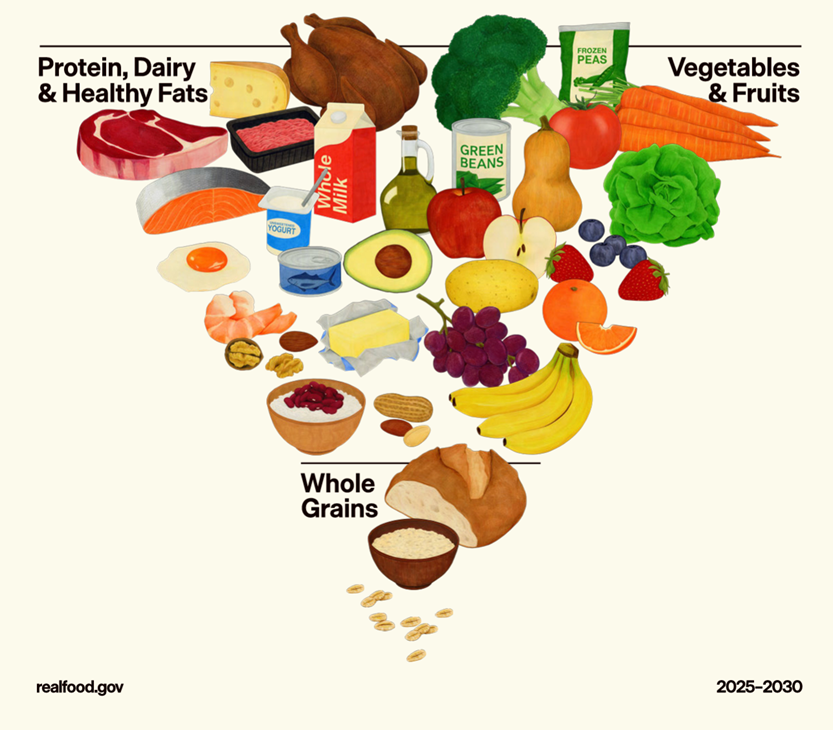
For decades, Americans were told a familiar story: build your diet on grains, avoid fat, and keep calories low. The advice was well-intended, but for many people it didn’t translate into better health—or better energy, weight, or metabolic markers.
Now, in a striking pivot, federal nutrition messaging is being “reset” around a simpler, more clinically familiar idea: eat real food, prioritize protein, include whole-food fats, emphasize produce, and sharply reduce ultra-processed foods and refined carbohydrates. The new “inverted” food pyramid makes that shift visible at a glance.
If you’ve felt confused by whiplash nutrition headlines over the years, you’re not alone. But this moment is different. Whether you agree with every detail or not, these changes represent a major inflection point in federal guidance—one that will influence everything from food labeling to school meals to what people believe is “healthy.”
Why this change is such a big deal
The federal Dietary Guidelines are updated every five years, but the 2025–2030 release is being described by federal agencies as a historic reset in approach. There is less fixation on single nutrients and more emphasis on food quality and ultra-processed food reduction, while elevating protein and whole-food fats as foundational.
A few headline shifts are getting the most attention:
• Higher daily protein targets (expressed as a body-weight range rather than a simple minimum), with the visual pyramid and companion guidance placing protein at the center of meals.
• A stronger stance against ultra-processed foods (UPFs) and refined carbohydrates as default staples.
• A return of full-fat dairy as an acceptable option in the recommended pattern (with continued limits on saturated fat overall).
At the same time, some familiar guardrails remain:
• Keep saturated fat under 10% of daily calories
• Limit sodium and added sugars
These constraints still appear in the conversation around the guidelines.
American health declined during the era of prior guidance—what we can say (and what we can’t)
It’s tempting to blame past guidelines for today’s health crisis. The reality is more complicated.
What we can say with confidence is that during the last few decades of “low-fat” cultural dominance and a food system increasingly built around refined grains, added sugars, and industrial processing, the U.S. experienced a dramatic rise in obesity and severe obesity.
For example, CDC reporting shows obesity prevalence among U.S. adults has been around 40% in recent years, and the long-term trend from 1999–2000 to 2017–2020 shows a significant increase.
But guidelines are only one factor. The rise in obesity and chronic disease also tracks with:
• greater availability of ultra-processed foods
• larger portions and snacking frequency
• more sedentary lifestyles
• sleep disruption and chronic stress
• economic and environmental pressures
So the fairest conclusion is this:
America’s health declined significantly while earlier nutrition messaging dominated, and this new guidance is seeking to correct course by targeting the real-world drivers: ultra-processed foods, refined carbs, and inadequate nutrient density.
The FDA piece: why “healthy” labels are changing, too
You asked specifically about the “recent overhauled FDA guidelines.” The FDA doesn’t write the Dietary Guidelines (those come from USDA and HHS), but it does create labeling rules influenced by those recommendations.
A major example is the FDA’s updated definition of when foods can use the “healthy” claim on packaging. The FDA finalized a rule updating the “healthy” nutrient content claim and linking it to dietary guidance and limits on nutrients such as saturated fat, sodium, and added sugars.
This matters because it moves “healthy” away from marketing fuzziness and toward a more structured standard—at least on paper. That labeling shift, together with the 2025–2030 Dietary Guidelines, creates a new foundation for consumer choices, industry reformulation, and public policy.
What the “inverted” pyramid looks like in real life
Most people don’t need more information about nutrients. They need a picture of dinner.
Here’s a practical translation of the new pattern—written for real kitchens, real budgets, and real schedules:
1) Start with protein as the anchor
Protein is not a garnish or an afterthought.
Examples:
• eggs, Greek yogurt, cottage cheese
• fish, chicken, turkey, beef, pork
• tofu, tempeh, lentils, beans (paired strategically to hit adequate protein)
• nuts/seeds as add-ons, not the whole plan
The new guidelines frame protein needs more personally (based on body size and activity) and spotlight protein at meals. The reason is that protein supports tissue repair, immune function, and healing—especially relevant for periodontal therapy, surgery, implants, and recovery.
2) Surround protein with plants you can name
Aim for a variety of colors and flavors:
• leafy greens, broccoli, peppers, onions
• berries, apples, citrus
• beans/legumes and fiber-rich vegetables
3) Choose fats from whole foods, not industrial “mystery blends.”
Examples of healthier fats:
• olive oil, olives
• avocados
• nuts, seeds
• eggs, seafood
• full-fat dairy in appropriate forms (especially without added sugar)
When people reduce “low-fat” processed snacks and replace them with real food fats plus protein, they often snack less frequently.
4) Keep whole grains, but they should form a small part of each meal—don’t allow refined grains to take center stage.
Whole grains can be part of the pattern, but the modern problem isn’t “carbs” in the abstract. It’s that refined grains and added sugars have become the default energy sources in many diets.
A Course Correction, Not a Cure-All
The new dietary guidelines are not a magic solution, nor do they erase decades of confusion overnight. But they do represent something important: a long-overdue course correction.
For the first time in generations, federal guidance is moving away from abstract nutrient targets and toward how real people actually eat—and how the body actually responds. By emphasizing protein adequacy, whole foods, and reducing ultra-processed products, the inverted food pyramid reflects what many clinicians have observed in practice for years: health improves when nourishment is simple, satisfying, and biologically appropriate.
This shift does not demand perfection. It does not require calorie tracking, food fear, or rigid rules. Instead, it encourages a pattern—one built around real food, eaten consistently, and adapted to individual needs, culture, and life stage.