
When Beauty Becomes a Moving Target -Heading
There is something fascinating about the human face: we read it constantly, instinctively, and with extraordinary precision.
Long before we understood collagen, hormones, fertility, symmetry, or facial proportions, human beings were responding to subtle physical signals in one another. We are drawn to certain characteristics not simply because fashion tells us to be, but because some aspects of attraction appear to have deep biological roots.
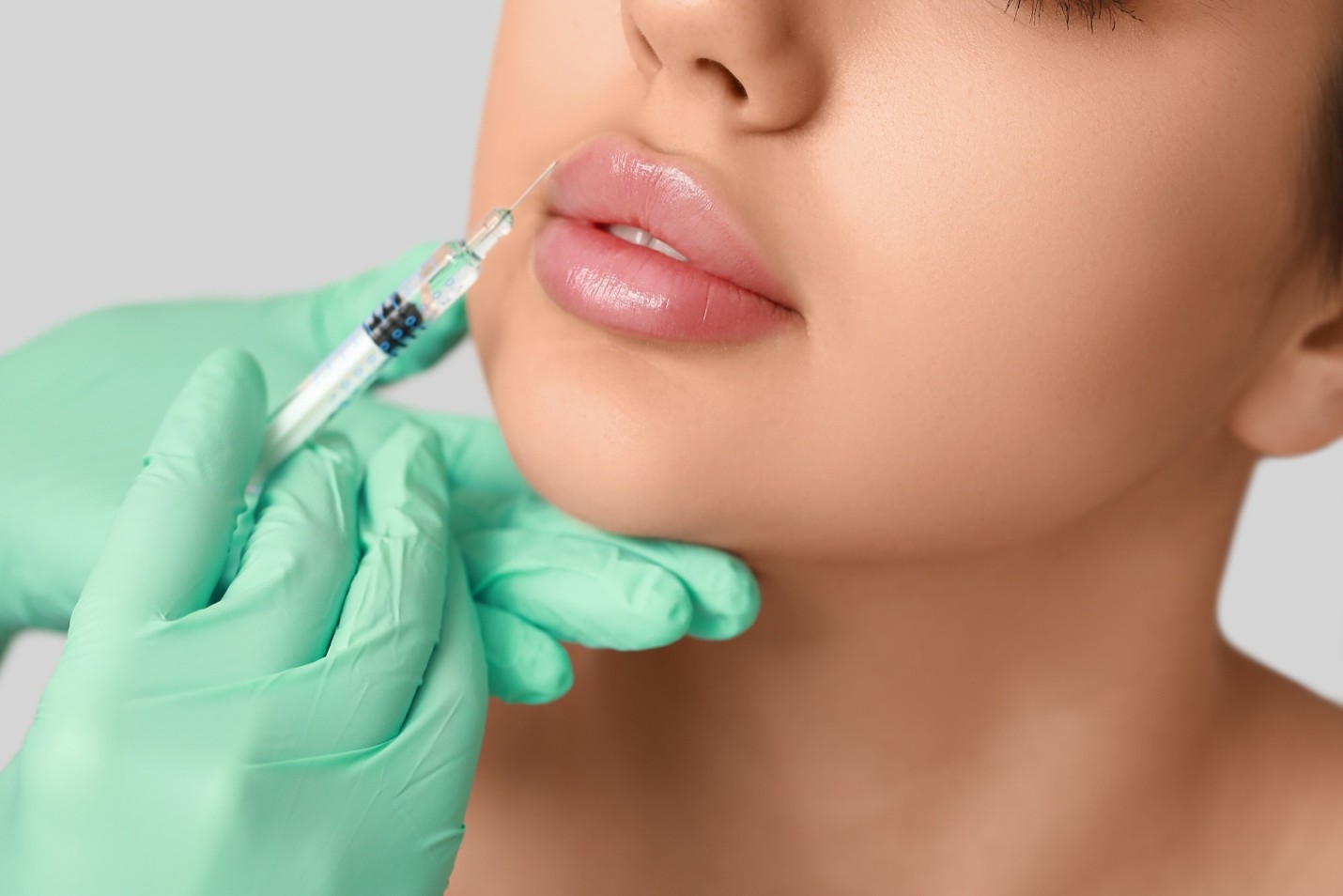
Full lips are a good example.
Lips tend to be fuller and more richly colored in youth, and they gradually lose collagen, elastin, fat, and hyaluronic acid as we age. There is also evidence that facial appearance changes subtly with hormonal fluctuations. Some researchers have proposed that features associated with youth and reproductive health may therefore function as unconscious biological signals of vitality.
We don't look at another person and consciously think, Her lips suggest youth and fertility. Attraction doesn't work that way. The brain processes an enormous amount of visual information before conscious thought ever enters the picture. That may help explain why fuller lips have long been considered attractive.
But there is another side to our remarkable ability to read faces. We are also exceptionally good at recognizing when something doesn't quite belong. A millimeter here, a slightly different proportion there, a smile that moves differently than expected—we may not be able to articulate what has changed, but our brains often recognize that something has.
That ability probably has ancient roots as well. Human beings evolved in intensely social groups in which interpreting another person's face mattered. We learned to recognize health, emotion, familiarity, threat, attraction, sadness, anger, and intention from extraordinarily subtle facial cues.
The face is not simply something we look at. It is one of our most sophisticated forms of communication. That is what makes our current pursuit of physical perfection so interesting—and potentially troubling.
When Enhancement Becomes the New Normal
Cosmetic enhancement itself is not the problem. There is nothing inherently wrong with wanting to look younger, restoring some of what aging has taken away, wearing makeup, coloring our hair, straightening our teeth, or choosing cosmetic procedures that make us feel better about our appearance.
The more important question is what happens when enhancement stops being enhancement and becomes expectation. Social media has created something unprecedented in human history. We can now spend hours every day looking at faces that have been carefully selected, posed, illuminated, filtered, digitally altered, injected, lifted, contoured, and edited.
Our brains adapt, and what once looked unusual can begin to look normal simply because we see it repeatedly. Researchers studying facial aesthetics have demonstrated this perceptual adaptation. When people are repeatedly exposed to exaggerated facial features, their judgment of what looks attractive can begin to shift toward the exaggeration.
That should make us think because beauty standards have always changed, but they have never before changed at the speed and scale of an algorithm. We are no longer comparing ourselves primarily with the people around us. We are comparing ourselves with thousands of carefully constructed images every week.
Those images quietly recalibrate our internal measuring stick.
A slightly fuller lip becomes fuller, then fuller still.
A smoother forehead becomes a completely motionless forehead.
A defined cheek becomes a more prominent cheek.
A narrow waist becomes an impossibly narrow waist.
The goalposts keep moving, and eventually, a natural face can begin to look insufficient simply because we have forgotten what natural faces look like.
The Human Eye Still Understands Proportion
There is another complication. Beauty is not simply a collection of desirable individual features. It is largely about relationships between features. The size of the lips matters in relation to the nose. The nose matters in relation to the chin. The chin matters in relation to the jaw. The eyes matter in relation to the width and length of the face.
Change one feature substantially, and the brain evaluates the entire composition differently. This is why making an attractive feature more prominent does not necessarily make someone more attractive.
At some point, enhancement becomes disproportionate, and human beings are remarkably sensitive to disproportion. We may not know why something looks unusual. We simply sense it.
This phenomenon is related to what researchers in perception and robotics have called the "uncanny valley": something can become increasingly appealing as it approaches normal human appearance, but when it becomes almost human while remaining subtly abnormal, our reaction can abruptly change.
Faces may create their own version of that experience. A little enhancement can preserve or restore familiar proportions. Too much can begin to interfere with them.
The irony is striking. In attempting to amplify a biological signal of attractiveness, we may eventually create another biological signal telling the observer that something is not quite right.
The Face Is Also a Conversation
There is something even more important than appearance. Faces move. During an ordinary conversation, hundreds of tiny expressions pass between two people. The corners of the mouth rise. The eyes narrow slightly. The cheeks move. The eyebrows respond. One person smiles, and the other unconsciously smiles back.
Much of this happens without our awareness. Psychologists sometimes describe aspects of this process as emotional contagion or facial mimicry. We partially experience other people's emotions by responding to their expressions. It is one reason a genuine smile can change the feeling in a room.
This raises an interesting question about excessive cosmetic alteration: what happens when the pursuit of appearance begins interfering with expression? The issue is larger than whether a procedure "looks natural." A face has a social function.
We need our faces to communicate warmth, amusement, concern, surprise, affection, skepticism, compassion, and joy. The most beautiful face in the world would lose something profoundly human if it could no longer fully express those things.
The More Difficult Question: Why Do We Keep Wanting More?
The psychology may ultimately matter more than the aesthetics. Many cosmetic procedures produce perfectly reasonable, subtle results. But the culture surrounding appearance increasingly encourages a particular cycle:
You notice something - you correct it - you feel better.
Then you notice something else, or you become accustomed to the improvement and want a little more.
Meanwhile, someone you follow online has fuller lips, smoother skin, higher cheekbones, a flatter stomach, more defined muscles, thicker hair, whiter teeth. The comparison begins again.
There may never be an endpoint because perfection itself does not exist. There is always another photograph, another procedure, another perceived flaw, and another person who appears to have something we don't.
This is where a conversation about cosmetic enhancement becomes a conversation about health. Because constantly monitoring ourselves for imperfections has a psychological cost.
When Children Begin Looking for Their Flaws
Perhaps the most concerning part of this cultural shift is how young it begins. Teenagers have always been self-conscious. Adolescence practically guarantees some uncomfortable relationship with one's changing body.
But previous generations mostly compared themselves to classmates, celebrities in magazines, or people on television. Today's teenagers and pre-teens carry the comparison machine in their pockets.
They can photograph themselves dozens of times, enlarge the image, examine every feature, apply a filter that instantly changes their face, and then compare the altered version with the person staring back in the mirror.
The filtered face may have larger eyes, smoother skin, and a smaller nose. Cheekbones are higher, and lips are fuller. When the filter disappears, the person staring back at them is seen as being less than perfect.
What message does that send to a 14-year-old brain? Perhaps it is: This is what you could look like. But there is an unspoken second message: The way you look now isn't good enough. That is the message we should worry about.
A young person should be learning what their body can do, discovering their interests, developing friendships, building competence, making mistakes, finding confidence, and gradually understanding who he or she is. Instead, some are learning to inventory themselves for defects.
The Missing Ingredient May Be Self-Love
There is a profound difference between changing something about yourself because you want to and believing you must change yourself before you can feel worthy.
From the outside, the behaviors may look identical, but internally, they are completely different.
One begins with: I like myself, and I'd like to change this. The other begins with: I will like myself once I change this.
The second proposition is dangerous because there is always another "this."
-Once the lips are right, perhaps the nose isn't.
-Once the nose is right, perhaps the skin isn't.
-Once the skin is right, perhaps the body isn't.
-Once the body is right, someone younger appears on the screen.
A person can spend an extraordinary amount of life trying to finally become acceptable to herself. And that is a terrible bargain.
The Cost of Perfection
I spend a great deal of time thinking and writing about health and longevity, and one thing becomes increasingly clear the longer I study both:
A long life is not necessarily a good life.
Healthspan is about more than biomarkers, body composition, glucose levels, exercise capacity, or the absence of disease. It is also about having enough physical and emotional health to participate fully in your own life. This requires perspective.
We should take care of ourselves.
We should exercise.
We should eat well.
We should protect our skin.
We should care about our appearance if doing so brings us pleasure.
We should know that there is nothing wrong with wanting to look attractive.
But we should also understand when self-care quietly becomes self-surveillance.
There is a point at which optimizing ourselves can begin stealing time from actually living. How many hours do we want to spend examining our faces? How much mental energy should we devote to comparing our bodies with other people's bodies? How much money, anxiety, attention, and dissatisfaction are we willing to exchange for the possibility of getting a little closer to an ideal that will inevitably change? And perhaps most importantly, what are we teaching the generation watching us?
What Will Matter at the End?
There is an uncomfortable simplicity to this question. At the end of our lives, very few of the things we worried about in the mirror will matter.
The extra wrinkle won't matter, the imperfect nose won't matter, the shape of our lips won't matter. What will matter are the people sitting beside us - the relationships we built, the children we raised, the friends who still call, the work that gave us purpose, the places we experienced, the dinners that lasted too long, the people we helped, the people we loved, and whether we were sufficiently comfortable with ourselves to be present for all of it.
Perhaps that is the beauty standard worth pursuing. Perfection isn’t the goal, and neither is youth indefinitely preserved, or becoming a better copy of somebody we follow online. But becoming increasingly comfortable inhabiting our own face, our own body, and our own life.
There is nothing wrong with changing something about us. We should simply be careful that the pursuit of changing ourselves does not become a substitute for learning to value ourselves. Because the most troubling consequence of our obsession with perfection may not be what it does to our faces.
It may be what it teaches us to believe about ourselves.